
Cognitive Behavioral Therapy (CBT)
Practical, evidence-based support for stress, anxiety, and health-related challenges
Feeling stuck in patterns that just won’t shift?
If you’re feeling anxious, overwhelmed, reactive, or worn down by chronic pain or stress, you’re not alone. Many people come to therapy after months or years of trying to “think their way out” of the problem. Cognitive Behavioral Therapy (CBT) offers a structured, research-supported way to move from understanding what’s happening to actually changing it.
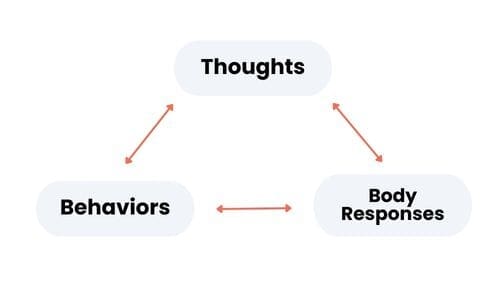
CBT focuses on understanding the connections between your thoughts, behaviors, and body responses, and how each influences the others. When one part of the system shifts, the others often do as well.
For example, you might wake with back pain and feel anxious that the whole day is ruined. If you remind yourself that the day is just getting started, get up, stretch a little, and re-engage, you might find that the day goes better than expected.
What CBT Looks Like in My Practice
CBT isn’t about talking in circles. It’s active, collaborative, and focused on what works to meet your goals. In our work together, we’ll:
- Clarify the goals and values that matter to you
- Identify patterns that may be keeping you stuck
- Develop strategies for navigating distress, uncertainty, and discomfort
- Build practical skills you can use both in and outside of session
- Adjust and refine as we go, based on what helps you
My role isn’t to tell you how to think or feel. It’s to work with you as you learn to shift your thoughts, emotions, body responses, and actions in more flexible and effective directions.

How CBT Helps
Over time, we all develop ways of thinking or reacting that might have made sense at one point, but no longer serve us. CBT helps you:
- Recognize unhelpful thoughts, patterns, and beliefs
- Understand how those patterns affect mood, body responses, and behavior
- Learn new ways to respond without getting caught in the same loops
For example:
- A parent may blame themselves whenever something goes wrong, leading to guilt and burnout.
- A student may overwork out of fear of failure.
- A person living with chronic pain may avoid activity out of fear it will make symptoms worse, even when some movement could help.
With CBT, we focus on developing practical strategies to shift towards healthier and more helpful patterns.
Where Mindfulness Comes In
Mindfulness gets a lot of hype, but at its core, it’s simple: noticing what’s happening inside yourself without immediately reacting to it. When useful, I integrate mindfulness-based skills such as focused breathing, grounding exercises, and guided attention. These tools help slow things down just enough so you can respond intentionally rather than being pulled along by old habits.
Is CBT Right for You?
CBT can be effective for:
- Anxiety and panic
- Chronic pain and medical conditions
- Insomnia and sleep struggles
- Depression and low mood
- Stress-related symptoms
- Emotional reactivity and overwhelm
CBT may be a good fit if you want a structured, collaborative approach that focuses on skill-building and real-world application. It works especially well for people who want to understand why certain patterns show up, and how to work with them more effectively.
Let’s Talk
If CBT and mindfulness sound like they might be a good fit for you, I invite you to reach out. I offer a free 20-minute consultation to explore what’s going on and how we might work together.