
Biofeedback
Teaching your body to help itself
When your body feels stuck in overdrive…
Tight shoulders. Racing heart. Nausea. Trouble focusing. Chronic pain that flares under stress. When your nervous system stays stuck in “on” mode, it’s hard to feel calm, present, or in control.
Biofeedback offers a practical, science-based way to work with those reactions. By making physiological patterns visible in real time, biofeedback helps you learn how to reduce excessive activation, improve recovery, and increase flexibility in how your body responds to stress.
What Is Biofeedback?
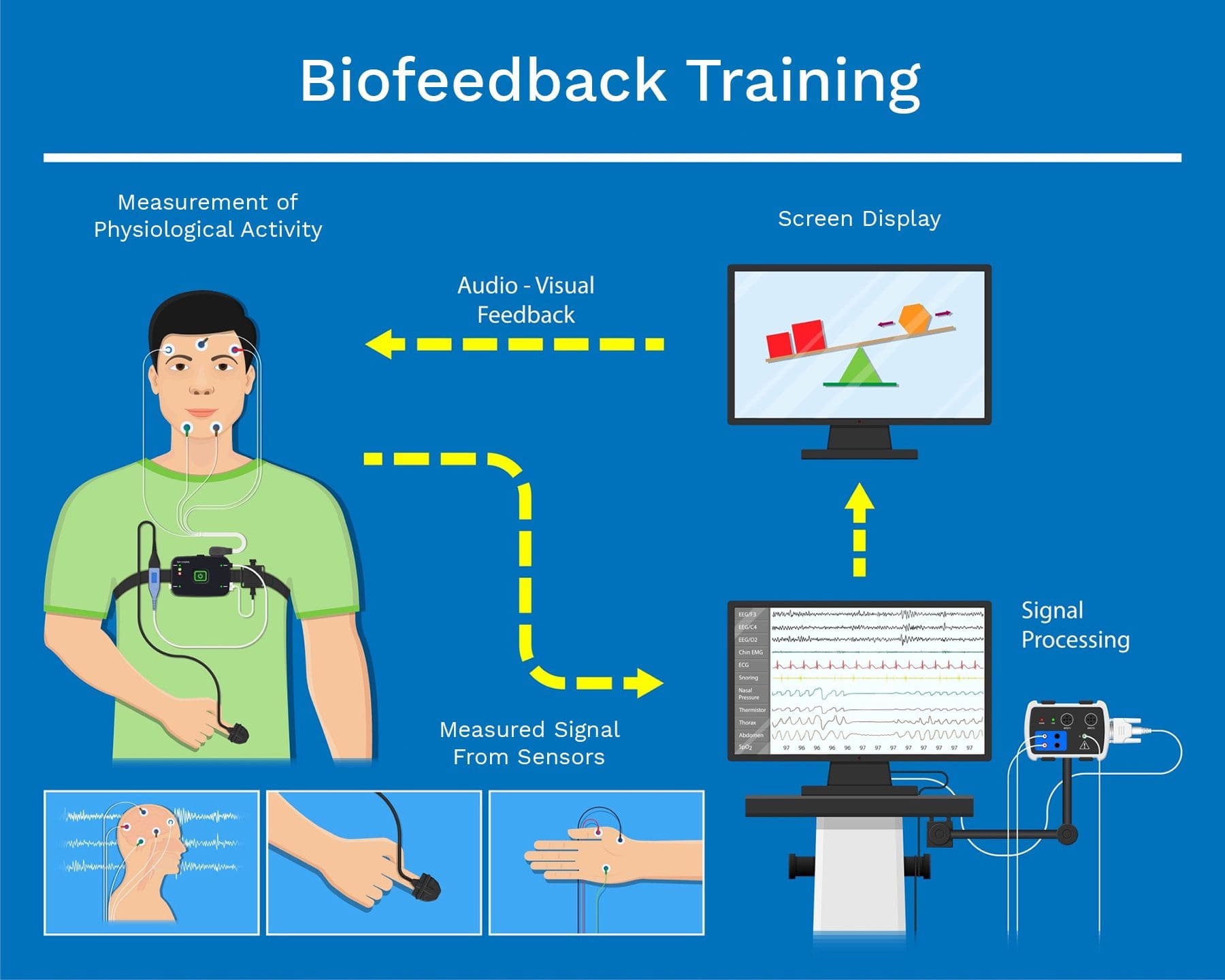
Biofeedback is a learning-based approach that makes internal body signals observable. Non-invasive sensors measure signals such as breathing, heart rate, muscle tension, or skin responses. The signals are processed and presented back as real-time feedback.
Using that feedback, you can practice noticing how your body responds to things like breath, posture, attention, or stress. Over time, this supports learning—helping you identify which responses allow your system to settle and which tend to keep it activated. With repetition and guidance, these patterns can become easier to access outside the office.
You can think of biofeedback as a way of making subtle processes more visible. The feedback itself doesn’t create change; it provides information that supports practice and learning, so self-regulation becomes more accessible over time.
“If you feel sick, you take your temperature. That thermometer gives you feedback about your body—and based on that, you decide how to respond.”
Biofeedback works the same way—it just gives you more kinds of feedback, and more tools to respond with.
What Biofeedback Can Help With
Biofeedback can be helpful for a wide range of stress-related or physical symptoms, including:
- Chronic pain and tension (e.g., headaches, neck/back pain)
- Migraines and TMJ
- Anxiety and panic symptoms
- Insomnia and sleep problems
- Irritable Bowel Syndrome (IBS) and GI discomfort
- Hypertension
- ADHD and focus issues
- Stress-related fatigue or burnout
If your symptoms have a physical component—and most do—biofeedback may offer a new way forward.
Biofeedback vs. Relaxation
Biofeedback is often confused with relaxation training, but they are not the same thing.
Relaxation focuses on feeling calmer. Biofeedback focuses on learning how your nervous system works and how to change it intentionally.
While relaxation may be one tool we use, biofeedback is fundamentally a learning process. You’re not just trying to calm down; you’re developing skills to recognize physiological patterns, adjust them in real time, and apply those skills under real-world conditions, including stress, pain, or fatigue.
The goal isn’t to be calm all the time. The goal is flexibility, recovery, and control.
What a Session Looks Like
Sessions are active and skill-focused. Typically, you can expect:
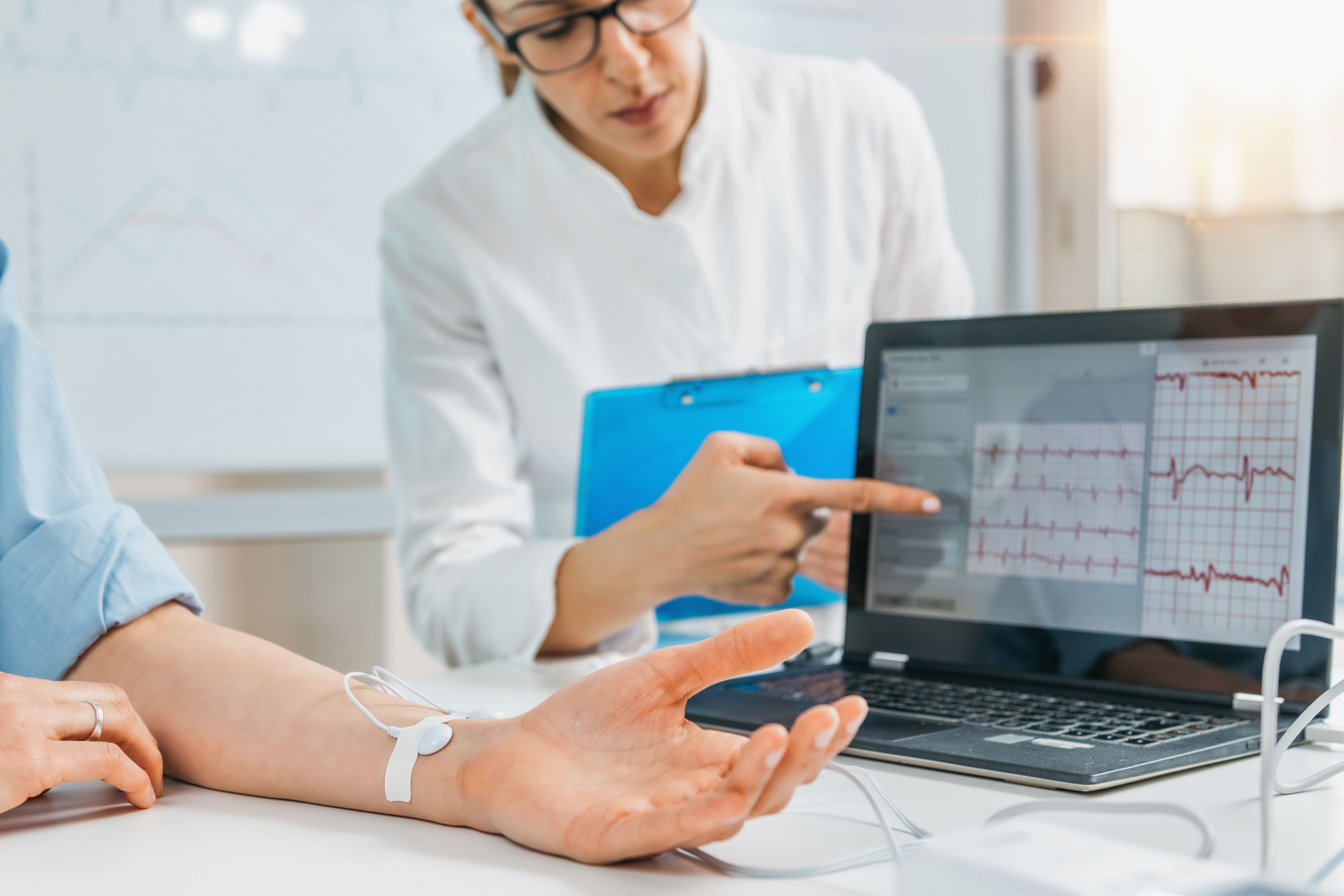
Sensor placement
Small sensors are placed on your skin to monitor physiological signals. They don’t hurt, sting, or restrict movement.
Real-time feedback
You’ll see how your body responds to breathing patterns, posture changes, everyday stressors, and sometimes specific thoughts.
Guided practice
With coaching, you’ll practice ways to shift unhelpful reactions, reducing overactivation and improving control.
Skill-building
The techniques you learn become tools you can use outside the office. Over time, these skills help reshape long-standing patterns of stress, pain, or reactivity.
Biofeedback is less about “treatment happening to you” and more about learning how to work with your own physiology.
What Changes With Practice
When you can see what your body is doing and learn how to influence it, biofeedback can help you:
- Regulate nervous system activity more effectively
- Improve focus, attention, and sleep
- Reduce the intensity of stress, anxiety, and pain
- Feel more connected to and informed by your body
Is Biofeedback Right For you?
You don’t need a specific diagnosis to benefit. If your body’s reactions feel out of sync with how you want to live, biofeedback may help you regain traction.
Many people come to biofeedback after trying medications or other treatments and still feeling stuck. Together, we look at what your body is doing—and what it needs to respond differently.
Let’s Talk About What’s Going On
If you’re curious about whether biofeedback can help with what you’re experiencing, I offer a brief consultation to explore your goals and what working together might look like.